Service 03
Faucet and fixture repair: small parts, specific failures
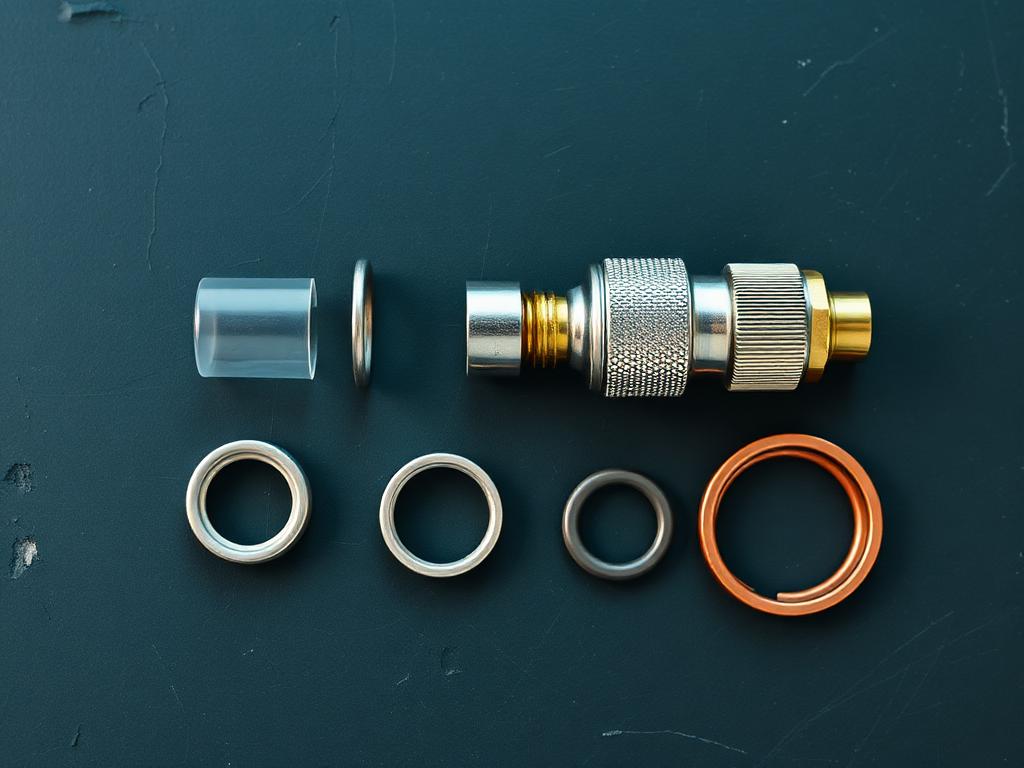
A faucet is a handful of seals doing one job each. Almost every complaint — a drip, a stiff handle, weak flow, a wet cabinet — maps to a particular seal, and knowing which one decides whether this is a ten-dollar part or a new fixture.
Design conceptWhere the leak is
Four leaks that look similar and are not
The location of the water is the diagnosis. Note exactly where it emerges before touching anything.
Leak location → part involved
| Where water appears | What is usually failing |
|---|---|
| Drip from the spout when closed | Cartridge, ceramic disc set, or washer and seat, depending on the design. |
| Seepage around the handle | Handle-stem O-rings or the packing on older designs. |
| Water at the base of a swivel spout | Spout O-rings inside the collar where the spout rotates. |
| Puddle in the cabinet, dry faucet | Angle stop, supply connector, or the drain tailpiece and trap above it. |
| Water under the sink rim | The seal between the fixture and the counter, often after silicone has aged. |
| Sprayer hose damp under the sink | Hose or the quick-connect at the faucet body. |
Hard water
What Miami's mineral content does to fixtures
Hard water is not a defect, but it is the reason several very common complaints keep coming back.
Aerators clog first
The screen at the spout collects scale and grit. It is the most common cause of a single weak faucet and the easiest thing to fix — unscrew, rinse, soak, reassemble.
Seals abrade faster
Mineral particles moving past a rubber or ceramic seal act like a very fine abrasive, so cartridges in hard-water homes tend to have shorter service lives.
Shutoffs seize
Angle stops that are never operated can mineralise open. Turning each one gently once or twice a year keeps them usable when you need them urgently.
Sequence
How a fixture repair usually proceeds
Isolate at the stop, not the main
The angle stops under the fixture should hold. If they weep or will not close, replacing them becomes part of the job — which is common in homes where they have never been turned.
Identify the exact fixture design
Cartridge, ceramic disc, ball, or compression. Manufacturer and model determine which parts exist and whether they are still sold.
Inspect the seat, not just the seal
A new cartridge dropped onto a scored seat will drip again. Checking the surface it presses against is what makes the repair last.
Replace supply connectors while open
Braided connectors age out and are a common source of sudden cabinet flooding. Swapping them during work already in progress is cheap insurance.
Test under pressure and under load
Restore water slowly, check for weeping at every joint, then run the fixture hot and cold and check again once things have warmed and moved.
When replacement makes more sense
What you can try safely
Questions
About faucets and fixtures
Why does my faucet drip even when it is fully closed?
Because the part that actually seals is worn. In a cartridge faucet it is the cartridge; in a ceramic-disc design it is the disc set; in older compression faucets it is a rubber washer and the seat it presses against. The handle is only the lever that loads that seal, which is why tightening harder damages the seat rather than stopping the drip.
Only one faucet has weak flow. Is my pressure low?
Almost certainly not. House pressure affects every fixture. A single weak faucet is usually a mineral-clogged aerator, a partially closed angle stop, a kinked supply connector, or debris caught in the cartridge after work upstream. Unscrewing and rinsing the aerator is the first thing to try.
Water is leaking from the base of the spout, not the outlet.
That is a different seal — usually the O-rings where a swivel spout meets the body. On many faucets those are replaceable; on some sealed designs they are not sold separately, which turns a small leak into a fixture decision.
Should I replace both hot and cold parts at once?
Usually yes when they are the same age. The two sides have seen similar use and similar water, so the second one commonly fails soon after the first. Doing both while the faucet is already apart avoids repeating the whole job.
Working out what your plumbing problem actually is?
Note what you can observe — where the water shows up, when it started, and what you already tried, then call. The assistant can also check open times and schedule a visit once you confirm the details.